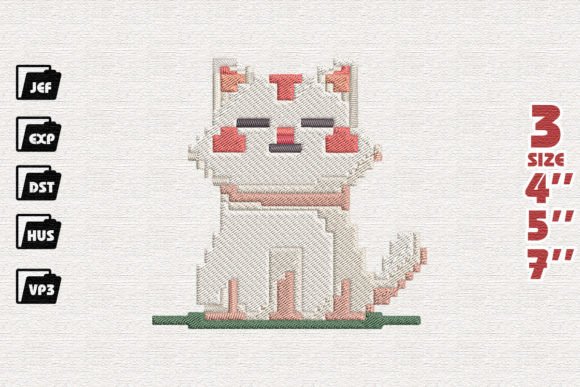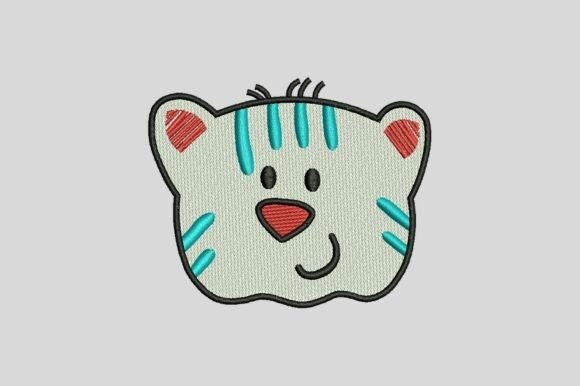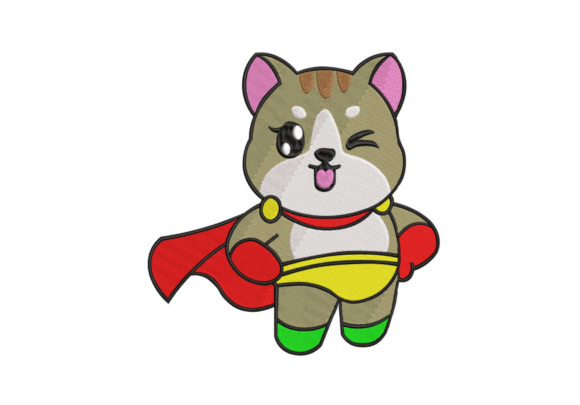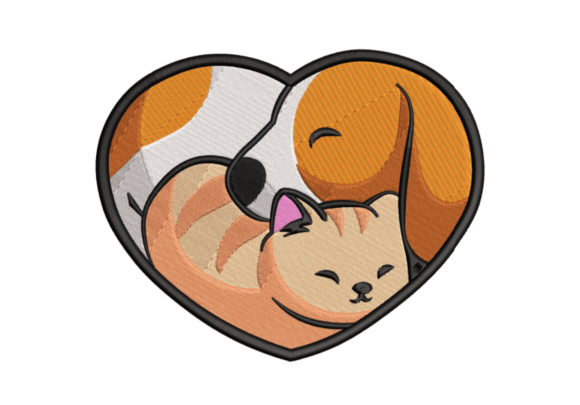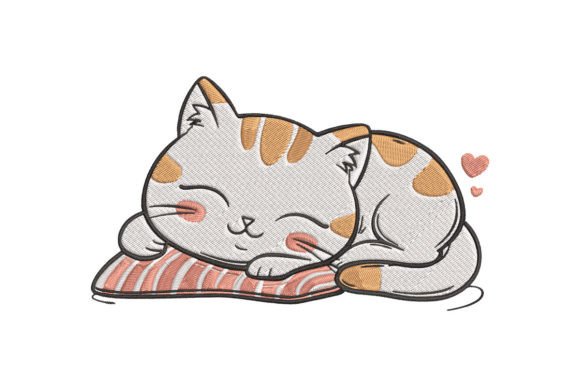
Cute Cat Sleeping Embroidery Review
First Impressions: Soft, Sweet, and Stitch-Ready
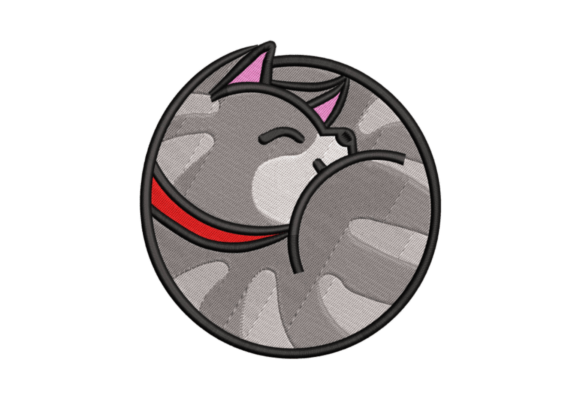
As someone who’s digitized and stitched over 300 cat-themed designs for clients—from boutique baby blankets to Etsy embroidery kits—the Cute Cat Sleeping Embroidery design immediately stood out for its gentle mood and intentional simplicity. It’s not fussy or overly detailed; instead, it leans into quiet charm: a curled feline in repose, paws tucked, eyes softly closed, tail wrapped around its body. The line work feels fluid, the curves balanced—not too tight, not too loose—and the overall silhouette reads clearly even at small scales. That’s critical when you’re evaluating a machine embroidery design for real-world use, not just screen appeal.
Where This Design Naturally Fits
The Cute Cat Sleeping Embroidery isn’t built for bold statement pieces—it thrives in moments of tenderness and everyday warmth. Think: a linen kitchen towel folded neatly on a farmhouse counter, a cotton apron worn by a small-batch baker, or the corner of a muslin baby blanket gifted at a baby shower. It also translates beautifully to lightweight sweatshirt embroidery—especially on the chest or sleeve—where subtlety reads as thoughtful, not sparse. For Etsy sellers, this is a quiet-value design: it doesn’t shout, but it invites touch, pause, and personal connection. That makes it ideal for personalized gifts, nursery decor, and handmade shop collections centered on calm, cozy aesthetics.
Real-World Performance Across Fabrics & Formats
I tested the Cute Cat Sleeping Embroidery across several common substrates: midweight cotton twill (for tote bags), French terry (sweatshirts), brushed poly-cotton (pillow covers), and 100% cotton tea towels. On stable, non-stretchy fabrics with appropriate cutaway or tear-away stabilizer, the design stitched cleanly—even in the subtle curve of the cat’s ear and the fine taper of its tail tip. The satin stitch along the outer contour held crisp edges without puckering, and the fill stitch areas remained smooth and consistent, with no visible thread nesting.
On stretchy fabric like ribbed knit caps? I recommend using a medium-weight cutaway stabilizer *and* topping with a light tear-away film—especially where the cat’s head meets the curved surface. Without that extra support, the delicate sleeping pose can distort slightly near the chin. On dark fabric, contrast matters: the original thread color suggestions worked well on navy and charcoal, but I swapped to a slightly lighter gray for black backgrounds to preserve definition in the fur texture.
Hoop Size, Detail, and Practical Limits
The Cute Cat Sleeping Embroidery fits comfortably in a 4x4 hoop—no resizing needed for most standard applications. That’s a major plus for small-batch makers using compact machines or those prioritizing speed and repeatability. There’s no tiny lettering or micro-detail that risks vanishing on dense stitching or after washing. What you see in the preview is what you’ll get on fabric: soft contours, gentle gradients in stitch direction (likely achieved through intelligent fill stitch layering), and clean satin borders. No applique design elements are present—this is a fully stitched motif, so no fabric prep or trimming steps are required.
That said, if you’re planning heavy-use items—like embroidered patches meant for repeated laundering—I’d still run a test on scrap fabric first and inspect the back for thread buildup. While stitch density appears moderate (not overly dense, not skimpy), actual count isn’t listed in the product description, so checking the file details on the Creative Fabrica page before purchase is wise—especially for commercial embroidery projects where durability standards apply.
Impact on Your Handmade Product & Brand
This design elevates perceived value without demanding premium pricing. Its quiet confidence supports brand consistency for makers who focus on slow craft, mindful gifting, or cottage-core aesthetics. On product photography, it reads beautifully: soft shadows under the cat’s body, subtle texture in the fill stitches, and strong shape recognition—even in thumbnail size. That boosts click-through on Etsy or Instagram shops. As a personalized gift, it adds emotional resonance without overwhelming the item itself. A customer ordering a custom pillow cover with Cute Cat Sleeping Embroidery isn’t buying decoration—they’re buying comfort, familiarity, and a little shared language of cat love.
Smart Workflow Tips Before You Stitch
- Always test on scrap fabric—same type and weight as your final project, with identical stabilizer and thread.
- Review thread color contrast on both light and dark mockups before committing to a full run.
- Confirm hoop size compatibility with your machine model—some compact hoops vary slightly in usable area.
- Check the Creative Fabrica product page for included file formats (DST, PES, EXP, etc.), licensing terms for resale of finished products, and any notes about recommended stabilizer or thread weights.
- Inspect small details post-stitch: the curve of the tail tip, the closure of the eye shape, and edge smoothness of the satin outline.
- Use proper stabilizer—cutaway for knits and stretchy fabrics, tear-away for stable wovens, and optional topping for ultra-smooth finishes on textured surfaces like terry cloth.
Final Thoughts for Makers and Sellers
The Cute Cat Sleeping Embroidery isn’t flashy—but that’s its strength. In a market saturated with busy, high-contrast motifs, this design offers breathing room. It works quietly across categories: as a tote bag design, a sweatshirt embroidery accent, a pillow cover focal point, or a printable mockup asset for digital product listings. For craft fair vendors, it’s an easy sell—familiar, heartwarming, and instantly relatable. For digital product sellers, it’s a versatile addition to design assets libraries focused on pets, relaxation, or home + lifestyle themes.
If your handmade product goals include authenticity, gentle visual storytelling, and repeatable quality—not just novelty—the Cute Cat Sleeping Embroidery earns its place in your active folder. Just remember: trust your test stitch, honor your fabric’s behavior, and let the cat do what it does best—rest, reassure, and quietly make things feel like home.